

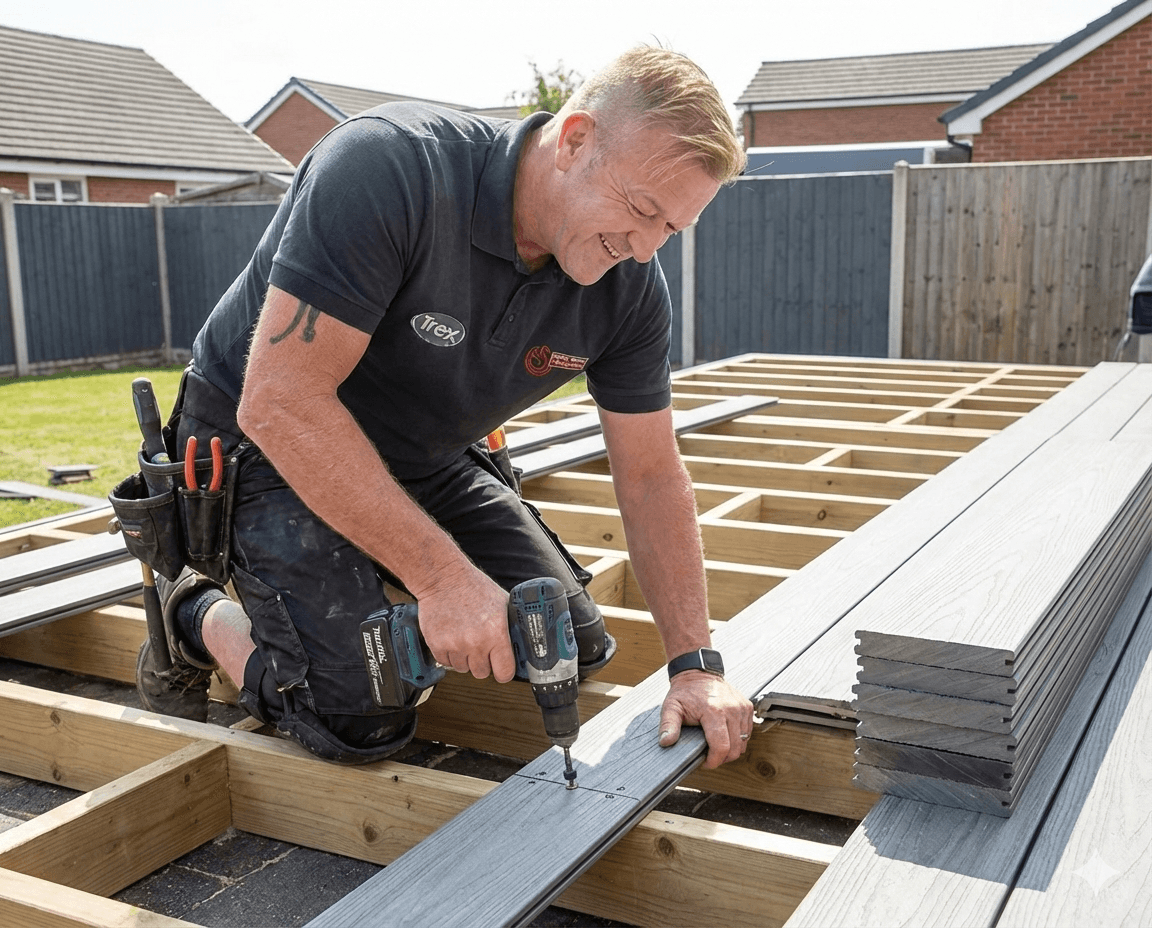

Simon Thomas

21 Dec 2025
How to Lay Composite Decking
If you are learning how to lay composite decking, you are already on the right track. Composite can look smart, feel solid underfoot, and stay looking good for years. But it only performs well when it is installed properly. In the UK, the weather makes this even more important. We get plenty of rain, damp ground, and sudden warm spells. All of that affects how a deck sits, drains, and moves.
I am going to talk you through the full process in a simple way. I will not overload you with fancy words. I will explain what matters most, what people often get wrong, and how to avoid common mistakes. By the end, you should understand how to build a strong base, how to set your boards straight, and how to leave the right gaps so the deck lasts.
What composite decking is, and why the install matters
Composite decking is made from wood fibres mixed with plastic. It is not the same as timber. Timber can swell and shrink, but composite can expand and contract more with heat. That means spacing is not just a nice extra. Spacing is a key part of the job.
Composite boards also need more support than many people expect. If the frame is weak, you will feel bounce. If joists are too far apart, boards can dip over time. If water cannot drain away, you can end up with algae and staining. So the best looking composite deck usually starts with the part you cannot see. The subframe and the base.
Before you start, plan the deck like a builder would
Take ten minutes and think about the space.
Where will people walk most? Where will furniture sit? Will you have a barbecue area? Are you building right outside French doors where water might splash back to the house?
Now think about board direction. Boards laid straight are easier and faster. Boards laid diagonally look great, but they need extra framing and more cuts. If this is your first install, straight boards are usually the best choice.
Also think about height. A low deck is simpler, but you still need airflow underneath. A raised deck needs posts, bracing, and stronger structure. If you are unsure about rules in your area, check local guidance before building, especially if the deck is high or close to a boundary.
Tools and materials you will actually use
You do not need every tool in the world, but you do need the basics. A tape measure, level, drill, saw, and a good square will do most of the work. A string line is also very helpful because it keeps your first board straight.
For materials, you will need boards, clips, screws, and a subframe. The subframe can be treated timber, aluminium, or a composite framing system depending on the brand and budget. In many UK gardens, treated timber is common, but it must be installed with drainage and protection in mind.
One thing I strongly like on UK builds is joist tape. It is a simple strip that goes on top of joists and helps stop water sitting on the timber. It can help your frame last longer.
Key facts table that helps you get it right
Always check your board manufacturer instructions, but these figures are common across many UK installs.
Installation detail | Typical UK guidance | Why it matters |
|---|---|---|
Joist spacing for straight boards | Often 300 mm to 400 mm centres | Helps stop bounce and sag |
Joist spacing for diagonal boards | Often around 300 mm centres | Diagonal boards need more support |
End gaps between boards | Often 3 mm to 6 mm | Allows expansion in warm weather |
Gap from decking to walls or fixed edges | Often 10 mm or more | Stops boards pushing into hard surfaces |
Drainage fall | Small fall away from the house | Helps rain run off |
If you remember one thing, remember this. Composite needs support and it needs room to move.
Step 1: Prepare the ground so the deck stays stable
This is where many DIY decks go wrong. People lay a frame on soft ground and hope for the best. Over time, the ground shifts and the deck drops in places. Then boards feel uneven, fixings loosen, and puddles form.
If your deck is near ground level
Start by removing turf and soft topsoil. You want a firm base. If the ground is wet or clay heavy, take extra care. Lay a weed membrane, then add a layer of gravel and compact it. Gravel helps water drain away. In the UK, that matters a lot.
If your deck is going over an existing patio or concrete
Do not lay composite boards directly onto slabs. It can trap water and reduce airflow. Build a small frame that lifts boards off the surface, or use adjustable pedestals if the system suits your design. The key is to let water move and air flow.
Step 2: Build a flat, strong subframe
A composite deck is only as good as the frame under it. If the frame is twisted, the boards will follow that twist. If the frame is bouncy, the finished deck will feel cheap.
Start with an outer rectangle. Check it is square by measuring corner to corner. The two diagonal measurements should match.
Then add joists. Keep joist spacing to the correct centres for your board direction. If you are laying diagonally, reduce spacing because the boards cross joists at an angle.
Add noggins between joists. Noggins stiffen the frame and reduce movement. This is especially important on raised decks and larger spans.
Now think about joins. Any place where two board ends meet needs proper support. The best method is to install double joists at joins, so each board end has its own line of fixing.
Finally, add joist tape if you can. It is a small cost compared to the full build, and it helps protect the top of the joists where water sits.
Step 3: Create drainage and airflow
Even though composite boards do not rot like timber, moisture still causes problems. Moisture brings algae, staining, and slippery surfaces.
A small fall helps water drain. You do not need a steep slope. You just want rainwater to move away from the house.
Airflow matters too. Leave space under the deck, and do not block all edges tight. If you are fitting fascia boards, allow ventilation.
Step 4: Set your first board perfectly straight
This part is slow, but it saves hours later.
Use a string line across the first row. Fit starter clips as the manufacturer says, usually along the first joist line. When you push the first board into place, check it is straight again. Step back and look along the length. If you fix a small mistake now, you avoid a bigger one later.
When the first board is right, the rest of the deck becomes much easier.
Step 5: Lay the boards using hidden clips
Most composite decking in the UK uses hidden clips. These clips sit in the groove of the board and screw down into the joist. They also set the side gap between boards.
Place a clip at every joist line. Tighten it firmly, but do not over tighten. Over tightening can damage the clip or pull the board too hard.
Slide the next board into the clips. Some boards need a gentle tap with a rubber mallet. Take your time. Keep checking for straight runs. It is normal to adjust slightly as you go, but you should not be fighting every board. If you are, your frame may not be flat.
Step 6: Leave expansion gaps so boards do not push up
This is the part that separates a good composite deck from a problem deck.
Composite expands in warmer weather. That means you need gaps at board ends, and you need clearance from walls, posts, and fixed edges.
If you lay boards too tight, they can push against each other in summer and lift. People often see this happen after a heatwave. The deck looked perfect in spring, then suddenly boards start to rise.
Follow the manufacturer gap rules. If the install guide says 5 mm at board ends, do not ignore it. Those gaps are there for a reason.
Step 7: Make joins look neat, not messy
Joins stand out on composite decking. A clean join plan makes the deck look professional.
Try to stagger joins rather than lining them up in one long row. When board ends meet, support them properly on double joists. Keep end gaps consistent so the spacing looks even across the deck.
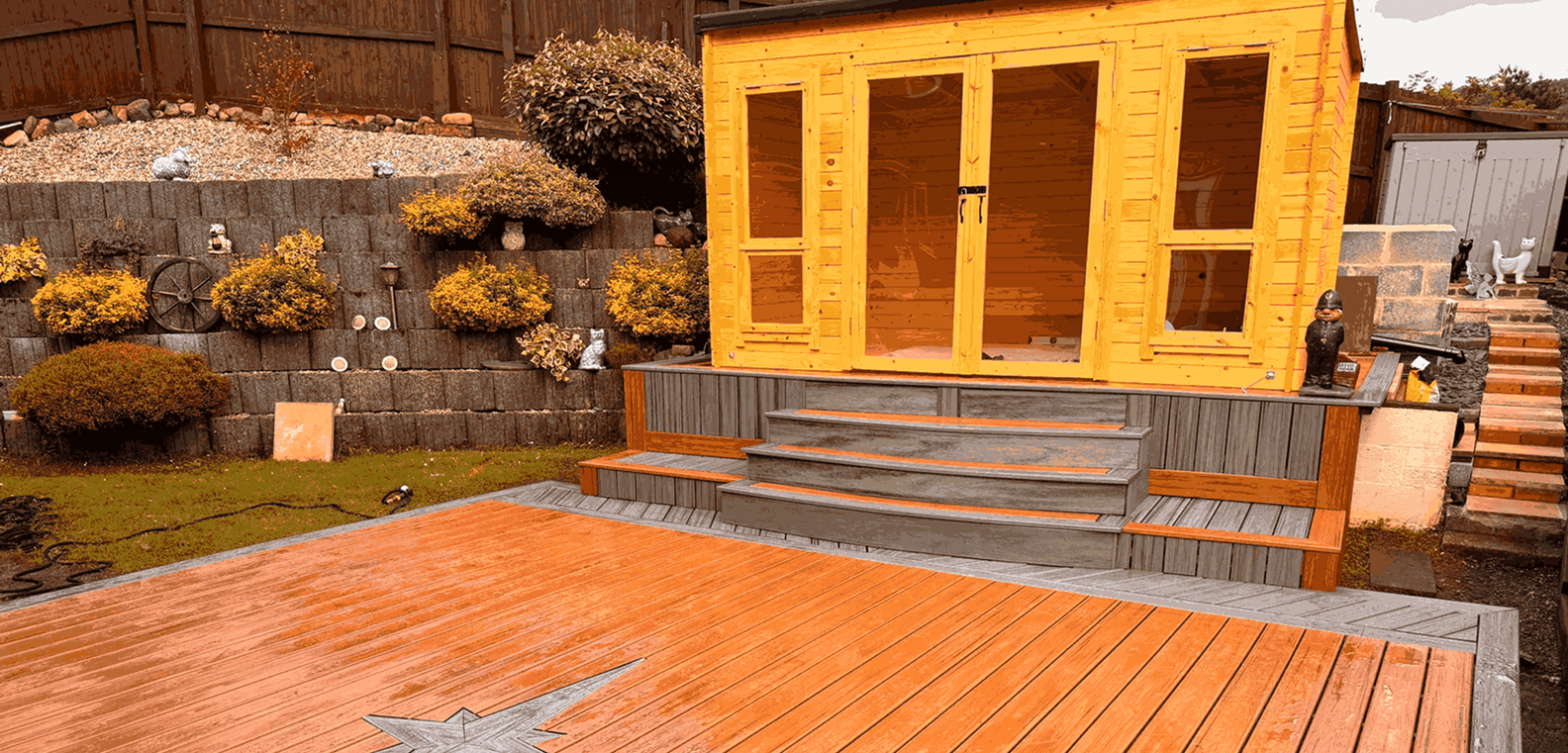
If you want a very clean look, some designs use picture frame borders. That means boards run around the edge like a frame, and the main boards sit inside. It takes more work, but it can look excellent.
Step 8: Trim edges and fit fascia boards
When all boards are down, you can trim the outside edges for a straight finish. Snap a chalk line or mark a straight line and cut carefully. Then fit fascia boards to cover the frame.
Fascia boards make a deck look finished. Just remember airflow. If you seal every edge tight to the ground, moisture can build up underneath.
Step 9: Finishing checks that stop problems later
Walk the deck slowly. Feel for movement. Listen for squeaks. Check that no clips are loose. Look at the gaps. Make sure nothing is tight against a wall.
Now give it a clean. Most composite boards only need mild soap and water after install. Avoid harsh chemicals unless your manufacturer says they are safe.
My views: what makes composite decking worth it
Composite decking can be a great choice in the UK, but it is not magic. It still needs a good build.
What I like
It gives a tidy, even finish. It is lower maintenance than many timber decks. It can feel safer for bare feet because it does not splinter like old wood.
What people should know
It can get slippery if algae builds up, especially in shady gardens. It can get hot in direct sun. It costs more than basic timber. Most of all, it needs correct framing and gaps. If you treat it like timber and cut corners, it will not look right for long.
Work with me: Simon Thomas Deck and Design
If you want composite decking laid properly, I can help. I am Simon Thomas from Simon Thomas Deck and Design. I build composite decks that feel solid, drain well, and look clean from every angle.
I can help with design, base prep, framing, board layout, steps, edges, and finishing details.
Share:








get in touch
ready to build your
dream deck?
Don't let the thought of planning and building overwhelm you. With our expertise, turning your vision into a stunning reality is simple and stress-free. Take the first step toward enjoying your beautiful new deck.