


Simon Thomas

21 Dec 2025
Is Composite Decking Slippery in Wales? The Honest UK Guide
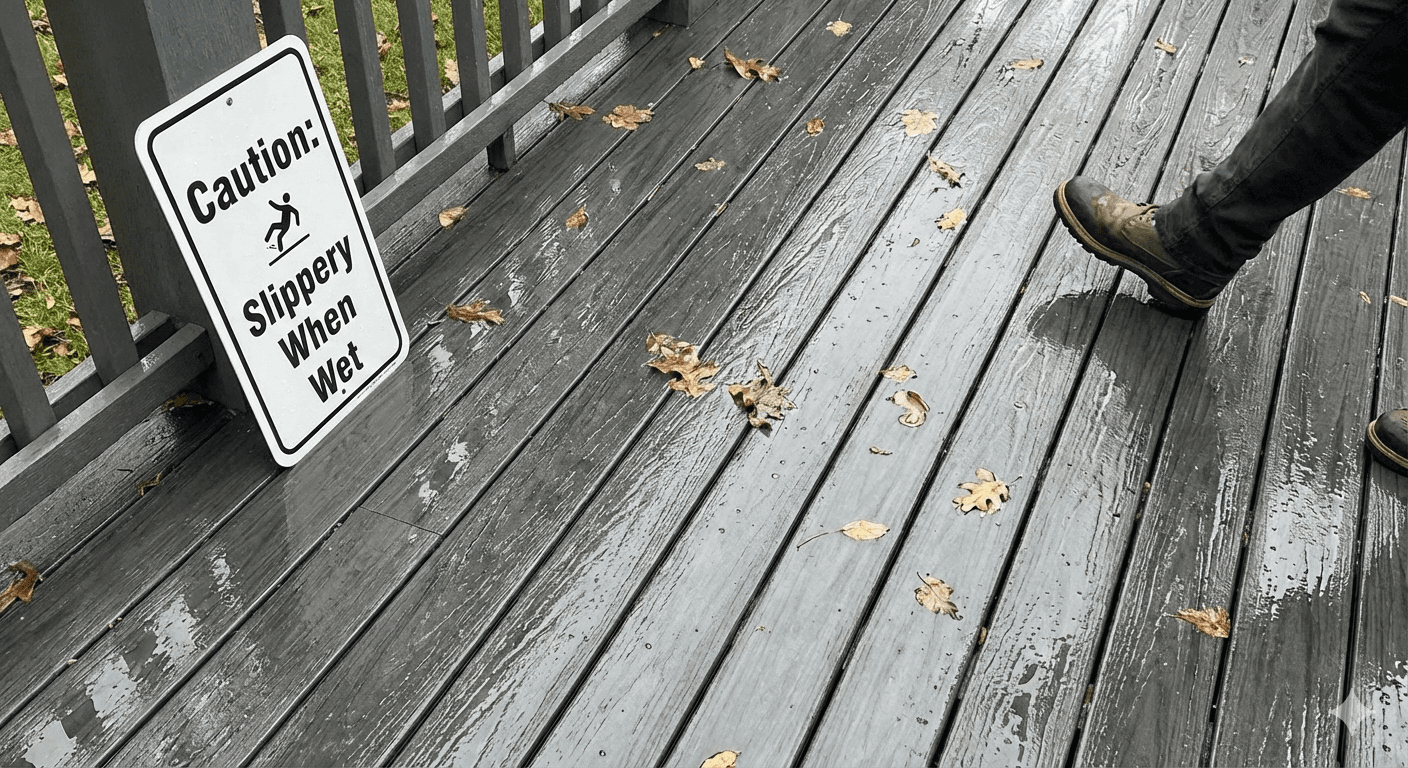
Is composite decking slippery? In Wales, it can be. It also does not have to be.
Most of the time, the board is not the real issue. The real issue is what builds up on the board in a wet, shaded climate. Wales gets frequent rain, lots of damp days, and plenty of gardens that dry slowly because of fences, trees, hills, and north facing layouts. That combination is perfect for algae and grime to form. Once algae forms, almost any outdoor surface can become slippery, including composite, timber, paving, and steps.
This guide explains:
what “slippery” really means in real gardens
why Welsh weather changes the risk
which composite finishes cope best in damp and shade
what to do if your deck already feels slick
what to look for before you buy boards
If you want the simplest takeaway: choose a grippier finish, keep it clean, and stop water sitting on it.
What people actually mean by “slippery”
When someone asks “is composite decking slippery?”, they usually mean one of these:
It feels slick when wet after rainfall
It gets worse in late winter or early spring
It becomes slippery in shaded areas where green algae forms
It feels slick under smooth shoes or bare feet
It is risky near a hot tub, outdoor tap, or back door
Steps feel unsafe even when the main deck feels fine
So the question is not only about composite. It is about moisture, dirt, organic growth, drainage, and how people use the space.
A brand new composite deck can feel grippy. A deck that is shaded and rarely cleaned can feel like a skating rink, even if the boards are “premium”.
Why composite decking can feel slippery in Wales
1) Rain and damp air keep surfaces wet for longer
In many parts of Wales, surfaces stay wet even after the rain stops. Coastal air and valley microclimates can hold moisture in the air. If boards stay wet for long periods, algae has time to develop and spread.
2) Shade is a bigger factor than people realise
Shade does two things:
it slows drying
it encourages green growth
A deck under a tree, beside a tall fence, or against a hedge will often stay damp and green up faster. Even a good board finish struggles if the surface stays wet and dirty.
3) Some finishes feel slicker under a film of water
Composite boards vary a lot. Some feel textured and “dry grippy.” Some are smoother. A smoother finish can feel fine on a sunny day, then feel slick when a thin film of water sits on top.
4) Dirt creates a slippery layer
A thin layer of grime can be more dangerous than you expect. Common culprits in Welsh gardens include:
leaf sludge in autumn
pollen and dust in spring
mud tracked from lawns
BBQ grease and food spills
bird droppings
tannin stains and organic residue
When wet, that layer becomes slick. It also feeds algae growth.
Is composite decking more slippery than timber?
It depends on the timber, the composite, and the maintenance.
Old timber often becomes slippery because:
algae grows easily on it
the surface can wear smooth over time
some softwoods get slick when weathered
untreated boards can hold grime and moisture
Composite often helps because:
it does not splinter
many boards have a textured finish
it tends to look more consistent over time
But composite is not magic. If algae builds up, composite can be just as slippery as timber.
A fair comparison:
Composite can be less slippery than old untreated timber if the finish has texture and the deck is cleaned.
Composite can be just as slippery as timber if it sits in shade, stays damp, and is left dirty.
Textured vs grooved vs smooth boards in wet Welsh gardens
Textured boards
Textured boards often have a woodgrain or brushed pattern. This usually gives better grip under light moisture and helps reduce that “slick film” feeling.
They can still become slippery if algae forms. Texture does not cancel algae. It simply buys you grip and time.
Grooved boards
Grooved boards can help water move along the board surface, but grooves can trap dirt, moss, and algae. If you choose grooves, you need to be willing to clean them properly. A quick rinse is often not enough.
In some gardens, grooved boards can be worse because the grooves hold grime. In other gardens, they perform fine because the deck dries quickly and stays clean.
Smooth boards
Smooth boards can feel nice underfoot, especially barefoot. In damp and shaded areas, they can feel slick sooner. If you have a shaded Welsh garden, smooth is usually the most “high risk” choice.
Practical recommendation for Wales:
If your deck is shaded or slow to dry, textured is usually the safest bet.
If you want grooved, plan for groove cleaning.
If you want smooth, make sure the deck gets sun and dries quickly, and accept more maintenance.
What increases slip risk in Wales and how to reduce it
Risk factor | What it does | How to reduce it |
|---|---|---|
Shade from trees or fences | Keeps boards wet longer | Trim back plants, improve airflow |
Constant damp or coastal air | Encourages algae growth | Clean more often, choose textured boards |
Grooves holding grime | Traps algae and dirt | Brush grooves, rinse properly |
Leaf fall in autumn | Creates a slick layer | Sweep often, rinse after storms |
Hot tubs or outdoor taps | Creates permanently wet zones | Add mats or grip strips near access points |
North facing decks | Slow drying | Improve drainage, choose grippier finish |
Pooling water | Feeds algae and slime | Fix fall, clear board gaps, improve ventilation |
How to make composite decking less slippery (do this in order)
1) Clean it properly and regularly
If your deck is slippery, cleaning is almost always step one. In Wales, twice a year is a minimum for many gardens. Shaded gardens often need more.
A routine that works:
Sweep thoroughly, including corners and edges
Wash with warm water and mild detergent
Use a stiff brush, especially on textured areas and grooves
Rinse well so soap does not leave a film
If algae is present, use a cleaner designed to remove organic growth. Follow your board manufacturer’s care guidance and test a small area first.
Common mistake:
People clean until it “looks better” but leave a thin film behind. That film becomes slick when wet. Rinsing properly matters.
2) Focus on the slippery zones, not the whole deck
Many decks are not equally slippery everywhere. The worst areas are usually:
the first boards outside the back door
steps and step edges
shaded strips beside fences
areas under trees
corners where water sits
Clean and treat those areas more often than the rest.
3) Fix drainage and improve airflow
This is the part most homeowners skip, and it is often the real fix.
Check:
Does water pool anywhere after rainfall?
Are board gaps clogged with debris?
Is there enough space underneath for airflow?
Is the deck too close to the ground?
If the deck stays damp underneath, the surface stays damp longer. More damp equals more algae.
Even small changes can help:
clear out blocked gaps
improve ventilation points
reduce plant crowding at the deck edge
make sure runoff is not draining onto the deck from a gutter or downpipe
4) Make steps a priority
Steps are where people slip. Even if the main deck is fine, steps can be dangerous.
Good options:
anti slip strips on the front edge
step edge trims designed for outdoor use
a high grip mat near the door if that zone stays wet
5) Coatings are a last resort
Some people want to “paint on” grip. This is rarely the best first move because coatings can peel, trap dirt, or conflict with manufacturer guidance.
If you go down this route:
confirm the product is suitable for composite or plastic
confirm it is rated for outdoor foot traffic
confirm it will not affect warranty
If you cannot confirm those, do not do it.
Buying composite decking in Wales: what to look for
Choose the right finish for your garden, not just what looks best in a showroom
Showrooms are dry. Your garden is not. Texture matters more in real conditions than most people expect.
Ask for slip testing or real performance information
Some brands provide slip resistance testing data. If they can show it, that is useful. If they cannot show anything at all, request a sample and test it wet in your own garden.
A simple test:
wet the sample
stand on it in the footwear you actually use outside
try it barefoot if that matters for your household
compare textured vs grooved vs smooth
Think about the layout honestly
If the deck is under trees or heavily shaded, you are signing up for more maintenance. That is not a reason to avoid decking. It is a reason to choose a finish that gives you grip and to plan a cleaning schedule.
Is composite decking slippery for kids and dogs?
It can be, especially when:
kids run and change direction quickly
shoes are wet
algae has built up
steps have no added grip
For children:
keep the door zone and steps clean
add extra grip on step edges
avoid smooth boards in shaded wet areas
For dogs:
Textured boards usually give better claw grip. Algae is still the issue. If your dog sprints from the back door, treat that area like a grip zone and keep it cleaner than the rest.
What I usually find when someone says “my composite deck is slippery”
In Welsh gardens, it is usually one or more of these:
the deck is shaded and is not cleaned often enough
grooves are holding grime
water is pooling due to poor fall or blocked gaps
steps have no extra grip
the board finish does not suit the location
Most of the time, the fix is not replacing the deck. The fix is:
a proper clean
a plan to keep problem zones clean
improved drainage and airflow
targeted grip on steps and door zones
A simple maintenance schedule for Wales
This is realistic, not obsessive:
Weekly during heavy leaf fall: sweep leaves and sludge
Monthly for shaded decks: quick wash of door zone, steps, and shaded edges
Spring and autumn: full clean, including groove brushing if applicable
After storms: remove leaf build up quickly before it turns slick
FAQs
Does composite decking get slippery when wet?
It can, especially if algae or a surface film is present. A textured finish helps, but cleaning and drying conditions matter more than most people think.
Are grooved boards safer than textured boards?
Not automatically. Grooves can help water movement, but they can trap grime and algae. If you choose grooves, you need to clean the channels properly.
What is the most common cause of slippery decking in Wales?
Algae growth in shaded, slow drying areas, often made worse by leaf debris and pooling water.
Can I pressure wash composite decking?
Sometimes, but you need to be careful. High pressure can damage the surface texture, force dirt into grooves, or mark the finish. If you use a pressure washer, keep the pressure sensible, use a wider fan, keep distance, and follow the manufacturer’s guidance for your specific board.
What is the safest composite choice for a shaded Welsh garden?
A textured finish, plus good drainage and a simple cleaning routine.
What should I do if my deck is slippery near a hot tub or outdoor tap?
Treat it as a permanent wet zone. Clean it more often and add grip near steps and access points.
Work with me: Simon Thomas Deck and Design
If you are in Wales and you are worried about slippery composite decking, I can help. I am Simon Thomas at Simon Thomas Deck and Design. I work with composite decking and outdoor spaces, and I can assess why your deck feels slippery and what will improve it.
I can help with:
deep cleaning and algae treatment
advice on board choice for wet and shaded areas
fixing drainage and airflow issues
adding anti slip solutions for steps and high risk zones
If you want a quick start, take a few photos of the door zone, steps, and the shadiest part of the deck. Those three areas usually reveal the real cause fast.
Share:






get in touch
ready to build your
dream deck?
Don't let the thought of planning and building overwhelm you. With our expertise, turning your vision into a stunning reality is simple and stress-free. Take the first step toward enjoying your beautiful new deck.